
The External Rival: How Emir Jorge Brings International Experience to the SCAA Open

He played college tennis in the United States. He chased the professional dream. Now, Emir Jorge brings a world of experience to the 2026 SCAA Open—and he's not done yet.
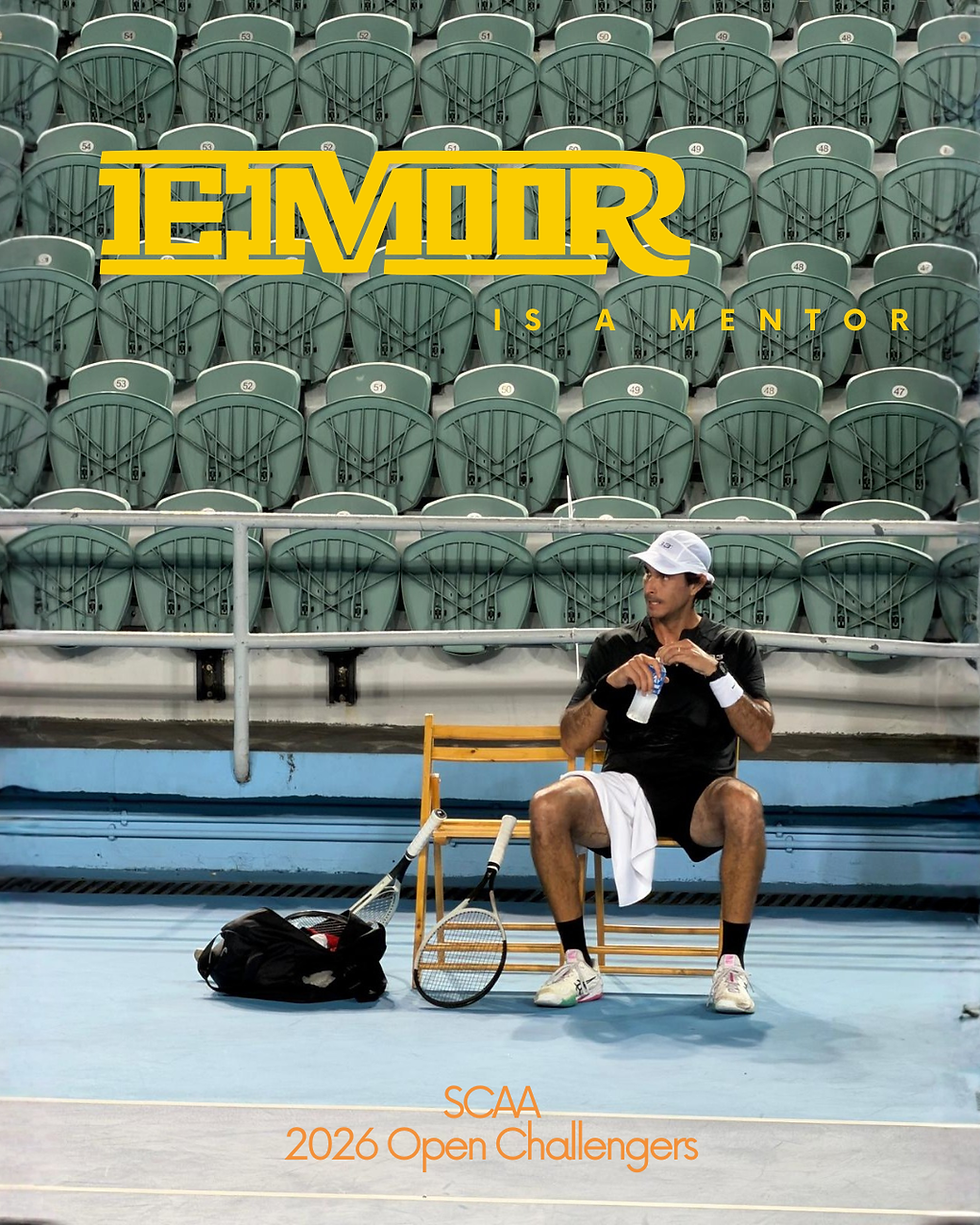
Emir Jorge has always been drawn to individual sports. There's something about being alone on court, solving problems in real time, that appeals to him in a way team sports never could.
"I always liked individual sports," he says. "I think tennis brings more to the table when we talk about individual sports and builds great character, also shapes you on court and outside court."
It's a philosophy that has guided his entire tennis journey. From the college courts of America to the professional circuit, and now to Hong Kong, Emir has embraced the solitary challenge that tennis presents. No teammates to rely on. No one to blame but yourself. Just you, the ball, and the moment.
Emir isn't your typical SCAA Open challenger. He is an external rival—a player who brings experience and perspective from beyond Hong Kong's shores. His tennis journey is defined by two key chapters: playing Division 1 college tennis in the United States, and a period chasing the professional dream. That background gives him a unique edge—he's faced different playing styles, adapted to different conditions, and learned what it takes to compete at higher levels.
"At some age, my tennis level is good enough if I am in good shape," he reflects. "The tennis level was always there. It's more about whether my body can hold the matches coming at a good rhythm."
That's the reality for a player at this stage of his career. The game is still there. The shots are still there. The question is whether the body can keep up with the mind. Ask Emir about the biggest difference between playing qualifying rounds and stepping into the main draw, and his answer is deceptively simple.
"I think you get into the main draw matches with a different confidence," he explains. "And in tennis, that makes a difference."
He's right. Tennis is a sport played in the mind as much as on the court. A player who walks onto Centre Court believing he belongs is already halfway to victory. Emir has that belief now—even if it took years of grinding to earn it. The SCAA Open carries weight. It's one of Hong Kong's most historic tennis tournaments, with a legacy that spans generations. For Emir, winning it would be more than just another trophy.
"For me, it would be a milestone into getting or winning tournaments," he says. "Also a big honor."

It's a measured response from a player who has learned not to get ahead of himself. He respects the tournament. He respects the competition. But he also believes he belongs. When things go wrong on court—when an uncharacteristic error slips through—Emir doesn't panic. He's learned to stay calm."Try to stay calm is key, especially in tough matches," he says. "I think it's not easy, but with time and experience, you start recognizing these moments." That recognition is everything. The ability to catch yourself before you spiral. To acknowledge the frustration without letting it take over. It's a skill that can only be developed through years of competing.
Tennis has a way of testing you in ways you can't predict. A wrong call. A shift in weather. A delay that messes with your rhythm. Everyone has their share of bad breaks, and Emir is no different. He's learned that getting frustrated only makes things worse, so he keeps his head down and plays the game in front of him. His response is simple: acknowledge, accept, and move forward.
For Emir, the biggest challenge is time. Work. Training. Competition. Recovery. It's a relentless juggling act. "The time with work, at least for me, and playing the tournament is difficult," he admits. "But there is always space or room to get better. Sometimes late in the night after work, or really early when no one has started yet." It's the reality of being a working athlete. You don't have the luxury of full-time training. You squeeze it in where you can—early mornings, late nights, stolen moments between responsibilities.
Emir agrees with the saying "You either win, or you learn." In fact, he believes you learn more from your losses than your victories. "You always learn more from your losses," he says. "After a match or losing a tournament, after a couple of days, I reflect and try to improve on it." It's a patient approach. He doesn't force the analysis immediately. He lets the loss settle. Then, when the emotions have cooled, he dissects what went wrong and how to fix it.
Behind every challenger is a network. For Emir, that network is intentionally small. "My wife is a big supporter," he says. "Also coach Marcos Manqueros comes and helps in the matches. Try to keep a small circle is key, I think." It's a philosophy that prioritizes quality over quantity. A few trusted voices are worth more than a crowd of opinions.
"Keep a small circle is key"
Emir likes being the underdog. There's less pressure. Fewer expectations. But he's also learning to enjoy winning. "I like underdogs," he says. "But it's good to feel and get used to winning also. The idea is to always be better, at least have that mentality into a tournament." It's a delicate balance. Stay hungry. Stay humble. But don't be afraid to win. The Resilience to Bounce Back after a tough loss, Emir gives himself time. "Take a couple of days just to cool off and get back into training," he says. "The only way to learn, especially in tennis, is to fail and do it again." No shortcuts. No magic formulas. Just the willingness to fail, learn, and try again.
Regardless of what happens at the SCAA Open, Emir's connection to Hong Kong tennis runs deep. He works with Tennis Asia at SCAA, helping develop young players and students on their tennis journey. "Just keep helping to develop new juniors and students into their tennis path," he says. "Also, every chance I have to play a tournament, I will. I have a couple of professional and ITF tournaments in the coming months I would like to join." He's not just a competitor. He's a builder. A mentor. A player who understands that tennis is about more than winning—it's about passing on what you've learned.
If Emir could speak to his younger self, he would keep it simple. "More patient. Take chances. Stay positive." Three pieces of advice. Three words of wisdom earned through years of competition. He's learned that patience wins matches. That taking chances opens doors. That staying positive keeps you in the fight.
The 2026 SCAA Open awaits. And Emir Jorge—the external rival, the mentor, the competitor—is ready to leave his mark.
This is the seventh feature in the SCAA Open Challengers series, profiling the athletes who define Hong Kong tennis.
This SCAA Open Challengers series is brought to you by 御藥堂, Shun Hing Group, HEAD, Set Win Group, Linkers CPA Limited, POI Corporation Limited, Titoni, SmartShots, Watson's, Gym Aesthetics GA, 奇華餅家, 甘棠燒鹅,儲存易迷你倉, Next Gen, TennisAsia, TNCL Total Nutrition Center Ltd, Little Apple Education Group Limited, Check Check Sin, ESG School HK, Wonder Mami, Eventist, Pones, 蒲昌酒庄. Wondermami.


Comments